Games Etruesports: A Complete Guide to Competitive Online Gaming

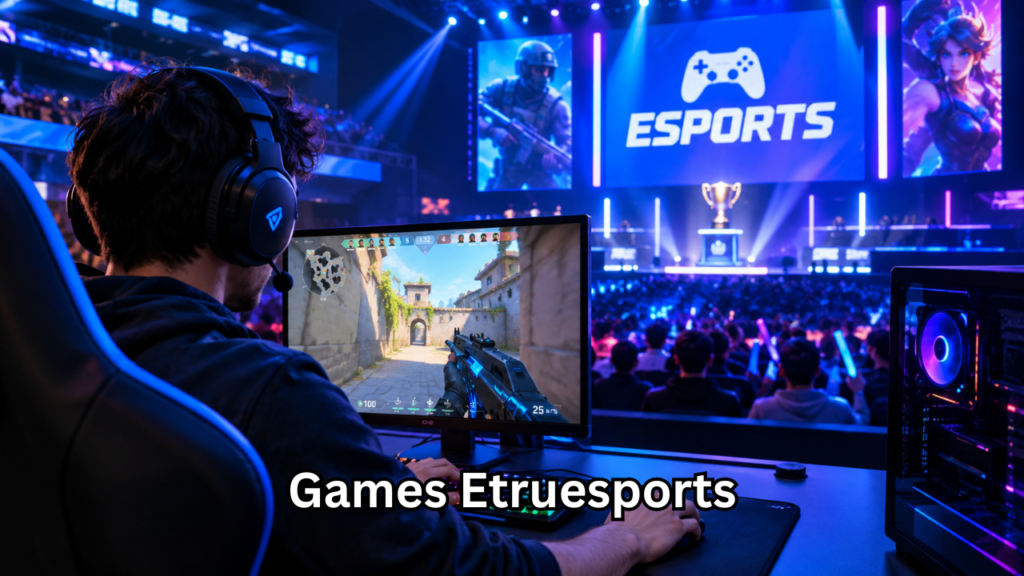
The world of competitive gaming has changed dramatically over the past decade, turning video games into a major form of entertainment, competition, and community. Games etruesports represents this growing space where players compete in organized digital competitions, develop advanced skills, follow professional teams, and connect with gaming communities around the world. Whether you are completely new to esports or already follow competitive gaming, understanding how this industry works can help you appreciate why it continues to attract millions of players and viewers.
Unlike casual gaming, competitive esports focuses heavily on performance, strategy, teamwork, communication, and consistency. Players often spend significant time practicing specific mechanics, studying opponents, and learning how professional competitions work. At the same time, modern esports has become much more than simply playing matches. Streaming, tournaments, team organizations, sponsorships, content creation, and online communities have all become important parts of the ecosystem.
What Are Games Etruesports?
Games etruesports can be understood as competitive video games and the broader esports environment surrounding them. Players compete against individuals or teams in structured matches, often following specific rules and tournament formats.
Some competitions are organized entirely online, while larger events may eventually lead to live tournaments. Professional competitions can include regional leagues, international championships, community events, and smaller online tournaments.
The most successful competitive games usually have several characteristics:
- Strong multiplayer gameplay
- Competitive balance
- Clearly defined rules
- A large player community
- Regular updates and improvements
- Tournament potential
- Spectator-friendly matches
These characteristics make a game more suitable for organized competition and help create a long-term esports community.
Why Competitive Gaming Has Become So Popular
Competitive gaming has grown because modern players want more than a simple entertainment experience. Many gamers enjoy the challenge of improving their skills and testing themselves against other people.
Online connectivity has also made competitive gaming more accessible. A player does not necessarily need to travel to a gaming center to compete. With a suitable device, internet connection, and compatible game, players can participate in online matches from many different locations.
Another major factor is the growth of gaming content.
Platforms that support live streaming and video sharing allow fans to watch skilled players, learn strategies, and follow tournaments. A single competitive match can attract viewers who may never personally participate in the competition.
Social interaction is another important element. Players can form teams, join communities, communicate during matches, and build friendships around shared interests.
Popular Types of Esports Games
Not every competitive game works in the same way. Different genres require different abilities and strategies.
Here are some of the most common categories:
| Game Type | Main Skills | Typical Competitive Focus |
|---|---|---|
| First-Person Shooters | Aim, reactions, positioning | Team combat and objectives |
| Multiplayer Online Battle Arena | Strategy, teamwork, decision-making | Team-based battles |
| Battle Royale | Survival, positioning, awareness | Last-player or last-team standing |
| Fighting Games | Timing, reactions, combos | One-on-one competition |
| Sports Games | Tactical awareness, precision | Simulated sports competition |
| Racing Games | Control, timing, consistency | Competitive racing |
| Strategy Games | Planning, resource management | Tactical decision-making |
Each genre attracts a different type of player. Someone who enjoys quick reactions may prefer a shooter, while another player might enjoy the long-term planning involved in strategy games.
The Skills Needed to Compete Successfully
Being good at a competitive game involves more than simply playing for long hours. Improvement usually comes from focused practice and understanding personal weaknesses.
Game Knowledge
Players need to understand maps, characters, weapons, abilities, objectives, mechanics, and common strategies. Strong game knowledge helps players make better decisions under pressure.
Communication
Communication becomes especially important in team-based games. Players need to share useful information without creating unnecessary distractions.
Good communication can include:
- Calling out important positions
- Sharing information about opponents
- Coordinating attacks
- Warning teammates about danger
- Planning objectives
- Keeping the team focused
Reaction and Decision-Making
Many competitive games require players to react quickly. However, fast reactions alone are not enough. Players also need to make good decisions within a limited amount of time.
A player may have several possible actions but only a short moment to choose the most effective one.
Consistency
Professional-level competition rewards consistency. A player who performs extremely well in one match but poorly in the next may struggle against experienced opponents.
Consistent practice can help players understand their strengths and reduce repeated mistakes.
The Difference Between Casual Gaming and Esports
Casual gaming and esports can involve the same title, but the experience is often very different.
A casual player may simply want to relax after school, work, or other responsibilities. Winning can be enjoyable, but it is not necessarily the primary objective.
Competitive players usually approach the game more seriously. They may review previous matches, study opponents, practice specific mechanics, and follow tournament strategies.
The key differences often include:
- Purpose: Entertainment versus structured competition
- Practice: Occasional play versus focused training
- Performance: Personal enjoyment versus measurable improvement
- Competition: Informal matches versus organized tournaments
- Teamwork: Optional in many games versus essential in team esports
Neither approach is better. Gaming can be enjoyed at many levels, and players should choose the experience that suits their interests.
How Esports Tournaments Work
Esports tournaments can use several different formats. The format depends on the game, number of participants, organizers, and level of competition.
Some events begin with open qualifiers. Players or teams compete for an opportunity to advance into a larger tournament.
Other competitions use league systems where teams play multiple matches throughout a season.
Common tournament formats include:
- Single elimination
- Double elimination
- Round robin
- Group stages
- League seasons
- Online qualifiers
- Playoffs and championship finals
Tournament rules normally explain how matches are scheduled, how winners are determined, and what happens if players or teams violate competition policies.
The Importance of Teams in Competitive Gaming
Team-based esports require players to understand their individual roles while also thinking about the team’s overall objective.
A strong team is not necessarily made up of five or more individually brilliant players. Coordination can be just as important as individual ability.
Teams often assign different responsibilities depending on the game. These might include offensive roles, defensive roles, support positions, leadership responsibilities, or specialized tasks.
Successful teams usually develop:
- Clear communication
- Trust between players
- Defined responsibilities
- Shared strategies
- Strong leadership
- Effective problem-solving
Team chemistry can also make a major difference during stressful matches.
Technology’s Role in Modern Esports
Technology has had a huge influence on competitive gaming. Better hardware, faster internet connections, improved displays, and modern gaming peripherals have changed the competitive experience.
Players may use equipment designed to provide accurate control and responsive performance. However, expensive equipment alone does not guarantee success.
Skill, practice, decision-making, and teamwork remain fundamental.
Technology has also improved the viewing experience. Modern broadcasts can provide statistics, player information, instant replays, live commentary, and multiple camera perspectives.
These features make competitive gaming easier for new audiences to understand and follow.
Watching Esports as a Spectator
You do not need to be a professional player to enjoy esports.
Many fans watch competitions because they enjoy the excitement of close matches. Others follow specific players or teams throughout an entire season.
Watching experienced players can also be educational. New gamers can observe positioning, movement, decision-making, teamwork, and strategy.
For beginners, it can be useful to start with smaller competitions or matches involving games they already understand. Once the basic rules are familiar, professional tournaments become much easier to follow.
Building a Healthy Gaming Routine
Competitive gaming can be enjoyable, but balance is important. Spending excessive amounts of time playing without adequate breaks can affect sleep, schoolwork, physical activity, and other responsibilities.
A healthy gaming routine can include:
- Taking regular breaks
- Getting enough sleep
- Staying physically active
- Drinking enough water
- Keeping up with school or work
- Maintaining time for family and friends
- Avoiding excessive late-night gaming
Players often perform better when they are rested and focused. Good habits can therefore support both gaming performance and everyday life.
How Beginners Can Get Started
Someone interested in games etruesports does not need professional equipment or tournament experience to begin.
Start with a game that genuinely interests you. Learning a game is much easier when you enjoy the process.
Next, understand the basic rules and mechanics. Instead of trying to master everything immediately, concentrate on a few important skills at a time.
A simple progression might look like this:
- Choose one competitive game.
- Learn its basic rules.
- Practice fundamental mechanics.
- Play regular matches.
- Review mistakes.
- Learn from experienced players.
- Improve communication if playing in a team.
- Participate in suitable community competitions.
- Track your progress over time.
The goal should be steady improvement rather than becoming an expert overnight.
The Role of Online Communities
Community is one of the biggest reasons esports continues to grow. Players often communicate through forums, social platforms, gaming servers, livestream chats, and dedicated communities.
These spaces can help players find teammates, discover tournaments, exchange strategies, and stay updated about competitive events.
However, online communities can also contain negative behavior. New players should avoid unnecessary arguments and report serious harassment through the appropriate platform tools.
A positive gaming community should encourage competition while still respecting other players.
Careers Connected to Esports
Competitive gaming has created opportunities beyond becoming a professional player.
The wider esports industry can involve many different roles, including:
- Professional players
- Coaches
- Analysts
- Tournament organizers
- Commentators
- Broadcasters
- Video editors
- Streamers
- Graphic designers
- Social media managers
- Event staff
- Gaming journalists
This demonstrates how broad the modern gaming industry has become.
Someone who enjoys esports but does not want to compete professionally can still explore creative, technical, media, or organizational roles connected to gaming.
Challenges Facing Competitive Gaming
Despite its rapid growth, esports also faces challenges.
Competition can be highly demanding, particularly for players who want to reach professional levels. Maintaining performance over time requires discipline and adaptation.
Games also change frequently. Developers may introduce updates, balance changes, new features, or rule adjustments. Competitive players need to adapt instead of relying entirely on old strategies.
Other challenges can include online toxicity, excessive gaming, performance pressure, unstable team environments, and maintaining a healthy balance between competition and everyday responsibilities.
Recognizing these challenges is important for creating a sustainable gaming experience.
What the Future of Esports Could Look Like
The future of competitive gaming is likely to continue developing alongside technology and changing entertainment habits.
Improved streaming technology could make competitions even more interactive. Better statistics and broadcast tools may help viewers understand complicated matches.
New games may also create entirely new competitive formats. At the same time, established esports titles can continue evolving through updates, new seasons, and community-driven competitions.
Mobile gaming is another important part of this growth. Smartphones have made competitive gaming available to a much wider audience, particularly in regions where traditional gaming computers or consoles may be less common.
The industry will likely continue becoming more diverse, with opportunities for players, creators, organizers, and audiences.
Frequently Asked Questions
What does games etruesports mean?
Games etruesports refers to competitive video gaming and the broader ecosystem surrounding organized esports. It can include competitive titles, tournaments, professional players, teams, communities, broadcasts, and related gaming activities.
Can beginners participate in esports?
Yes. Beginners can start by learning a competitive game, practicing fundamental skills, and participating in appropriate online or community competitions. Professional competition requires much more experience, but everyone starts somewhere.
Do esports players need expensive gaming equipment?
Not necessarily. Quality equipment can provide a comfortable and reliable gaming experience, but expensive hardware does not automatically create better players. Practice, game knowledge, decision-making, and teamwork are more important.
What types of games are popular in esports?
Popular esports categories include first-person shooters, multiplayer online battle arenas, fighting games, battle royale titles, racing games, sports simulations, and strategy games.
Is esports only about professional players?
No. Esports includes professional competitions, amateur tournaments, community events, content creators, spectators, coaches, analysts, broadcasters, and many other participants.
How can I improve at a competitive game?
Focus on one game, learn its core mechanics, practice consistently, study your mistakes, watch experienced players, and work on communication if you play as part of a team. Progress usually comes from consistent improvement rather than simply playing for more hours.
Final Thoughts
The world of games etruesports shows how video games have developed from a simple form of entertainment into a competitive and highly social activity. Players can compete individually or as teams, watch professional tournaments, join communities, and even explore careers connected to the wider gaming industry.
Success in competitive gaming requires more than quick reactions. Game knowledge, communication, decision-making, consistency, adaptability, and healthy habits all contribute to long-term improvement.
Whether someone plays casually, follows professional tournaments, or dreams of competing at a higher level, the esports ecosystem offers many ways to participate. As technology continues to evolve, competitive gaming is likely to remain an important part of the modern digital entertainment landscape.
Also Read: Alex Gorsky and Jerry Seinfeld: Careers, Success, and Public Profiles




[…] Also Read: Games Etruesports: A Complete Guide to Competitive Online Gaming […]